Jonathan Fahey Predicts Trump Could Prevail on Birthright Citizenship After New Legal Challenge
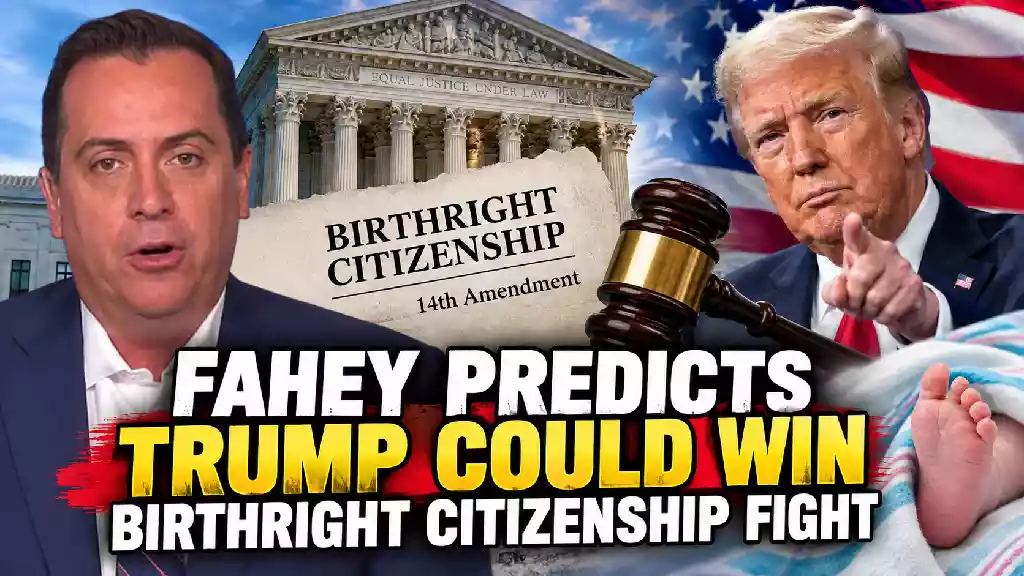
Jonathan Fahey predicts President Donald Trump could prevail in the birthright citizenship fight as the administration faces another legal challenge.
Jonathan Fahey Predicts Trump Could Prevail on Birthright Citizenship After New Legal Challenge
Jonathan Fahey Predicts Trump Could Win Birthright Citizenship Fight After New Legal Hurdle
The Trump administration’s effort to restrict birthright citizenship is facing another legal hurdle, but former acting ICE director and federal prosecutor Jonathan Fahey believes President Donald Trump could ultimately prevail, particularly because the administration has revised its approach following a previous Supreme Court ruling.
The latest controversy comes after a federal judge in Maryland blocked the administration’s newest order seeking to limit automatic citizenship for certain children born in the United States to foreign nationals. The judge concluded that the policy likely conflicts with the Constitution.
Trump Administration Faces New Birthright Citizenship Challenge
According to the discussion, the Maryland ruling represents the second major attempt by the Trump administration to restrict birthright citizenship after the Supreme Court rejected a broader effort earlier in the year.
Fahey argued that the administration may have a stronger legal position this time because the latest order was designed with the Supreme Court’s June ruling in mind.
At the center of the dispute is the 14th Amendment, which provides U.S. citizenship to people born in the country who are subject to U.S. jurisdiction. The interpretation of that language has become a major point of disagreement in the national immigration debate.
Fahey pointed to longstanding exceptions involving certain children of foreign diplomats and foreign invaders. He argued that the administration’s revised approach attempts to build on those existing exceptions by addressing children connected to foreign workers, foreign governments and individuals associated with groups considered enemies of the United States.
Jonathan Fahey Says Trump Has a Stronger Legal Argument
Fahey predicted that the birthright citizenship fight is unlikely to end with the Maryland decision. In his view, the case could move through additional courts and eventually return to the Supreme Court.
He said the Trump administration is on relatively strong footing regarding at least part of the new order because officials attempted to tailor the policy to the Supreme Court’s earlier decision.
That distinction could become important as federal courts examine whether the administration’s latest policy falls within constitutional limits.
Fahey also suggested that the president could ultimately receive guidance from the Supreme Court about how to implement restrictions on birthright citizenship. Another possible route, he said, could involve Congress passing legislation to provide additional legal authority.
Birth Tourism Remains a More Complicated Issue
While Fahey expressed confidence about portions of the administration’s approach, he acknowledged that birth tourism presents a more difficult challenge.
Birth tourism refers to situations in which foreign nationals travel to the United States with the intention of giving birth so that their children may receive U.S. citizenship under the existing interpretation of birthright citizenship.
Fahey argued that addressing birth tourism could be more difficult from an implementation standpoint. The issue has nevertheless become a significant part of the broader political debate over immigration, citizenship and the interpretation of the 14th Amendment.
The controversy is particularly significant because any lasting change to birthright citizenship could affect immigration policy and constitutional law for years to come.
H-1B and H-4 Visa Policies Also Under Debate
The birthright citizenship dispute is unfolding alongside other immigration policy changes being considered by the Trump administration.
The discussion also addressed the administration’s review of work authorization for certain H-4 visa spouses of H-1B workers. The H-1B program allows foreign workers with specialized skills to work in the United States, while certain H-4 spouses have been permitted to obtain employment authorization under a rule established in 2015.
Fahey argued that reconsidering H-4 employment authorization fits with what he described as the administration’s broader effort to prioritize American workers.
He also criticized alleged abuses of the H-1B system, including situations in which employers may use foreign workers to reduce labor costs rather than address genuine shortages of specialized workers.
Immigration Enforcement and Asylum Cases
Fahey also discussed a Department of Homeland Security initiative directing ICE attorneys to seek early dismissal of asylum cases that are considered legally deficient.
Supporters of the approach argue that quickly removing claims that do not meet legal requirements could help reduce the immigration court backlog and allow officials to focus resources on legitimate asylum cases.
Fahey said asylum is intended for individuals who can demonstrate a qualifying fear of persecution, rather than people who simply want to enter the United States to find employment.
The broader discussion reflects the Trump administration’s push for stricter immigration enforcement, tighter eligibility standards and policies designed to prioritize American workers.
What Happens Next?
The legal battle over Trump birthright citizenship policy is far from over. With the Maryland ruling potentially heading toward further litigation, the Supreme Court could once again become central to the dispute.
Fahey’s prediction is that the administration could ultimately succeed with at least portions of its policy or receive clearer guidance about how to pursue the changes legally.
For now, the debate over birthright citizenship, the 14th Amendment, immigration enforcement, H-1B visas and asylum policy remains one of the most closely watched areas of the Trump administration’s immigration agenda.
#Trump #BirthrightCitizenship #JonathanFahey #Immigration #14thAmendment #SupremeCourt #ImmigrationPolicy #H1B #H4Visa #ICE #DHS #Asylum #BirthTourism